

TELC B1 and B2 are German language certificates used to prove your language skills for study, work and a range of application purposes. Before you register, make sure you know exactly which exam you need and what your school, employer or receiving authority requires.
This article focuses on telc Deutsch B1/B2, explaining the exam structure, how it is scored and how to prepare effectively.
Find out more about the TELC exams held at G&A Education, a TELC exam venue in Hanoi, here.
1. TELC B1/B2 exam structure
The exam consists of a written part (Schriftliche Prüfung) and an oral part (Mündliche Prüfung). In the 300-point telc Deutsch B1/B2 format, the written part is worth up to 225 points, or 75% of the total; the oral part is worth up to 75 points, or 25%.
The written part covers Reading (Leseverstehen), Language Elements — grammar and vocabulary (Sprachbausteine), Listening (Hörverstehen) and Writing (Schriftlicher Ausdruck). The oral part usually has three sections: getting to know each other, presenting or discussing a topic, and solving a task together with your exam partner.
In this format, you need at least 60% in both the written and the oral part to pass — that is, 135/225 points in the written part and 45/75 points in the oral part. The minimum total score is 180/300.
2. Scoring and grades
Once you have reached the minimum in both parts, your total score determines your result:
| Total score | Grade |
|---|---|
| 270–300 | Sehr gut |
| 240–269.5 | Gut |
| 210–239.5 | Befriedigend |
| 180–209.5 | Ausreichend |
| Below 180 | Fail |
A score of 240 corresponds to the grade Gut on the TELC scale. So if you are aiming for 240+, plan your preparation around your total score while making sure neither part falls below the minimum.
3. How to prepare effectively
Practise with tests that match the real format
Instead of studying vocabulary and grammar in isolation, work through official TELC Übungstests to get used to the question types, timing and how points are distributed. After each test, note down the mistakes you make most often and focus on improving those specific skills. TELC also provides Übungstests with instructions and answer keys so candidates can get familiar with the format before the exam.
Train your writing against the marking criteria
In the writing section, do not focus only on correct grammar. Your text is also assessed on how fully it completes the task, how you express yourself, accuracy and range of vocabulary. So practise reading the task carefully, identifying every point you need to cover and organising your text clearly before checking your grammar and vocabulary.
Practise speaking in realistic situations
The oral exam does not only test how well you speak on your own; it also assesses how you interact with your exam partner. When practising, get used to giving your opinion, explaining your reasons, asking questions, responding to your partner's ideas and reaching an agreement together.
Practise within the time limit for each section, record your presentation and listen back to spot mistakes in pronunciation, grammar, vocabulary and expression.
4. An important note before you register
The name TELC B1/B2 can refer to different exams, such as telc Deutsch B1, telc Deutsch B2 or telc Deutsch B1·B2 Beruf. These exams do not share exactly the same structure or assessment. In particular, telc Deutsch B1·B2 Beruf is a two-level exam covering B1 and B2, with content based on the workplace.
So before you register, check the exact name of the exam, what you need the certificate for and the requirements of the organisation receiving your application.
Preparing for the right format from the start will help you plan your study time sensibly and understand exactly what you need to achieve in each part of the exam.

How Much Does It Cost to Live in Germany as a Student Each Month?
Student living costs in Germany are around €800–1,200 a month: an expense breakdown, 2026 health insurance, th
Read more
What Is Anmeldung in Germany? A Guide to Registering Your Address as a Newcomer
Anmeldung within 14 days: the documents you need, the process at the Bürgeramt and your Meldebestätigung — a g
Read more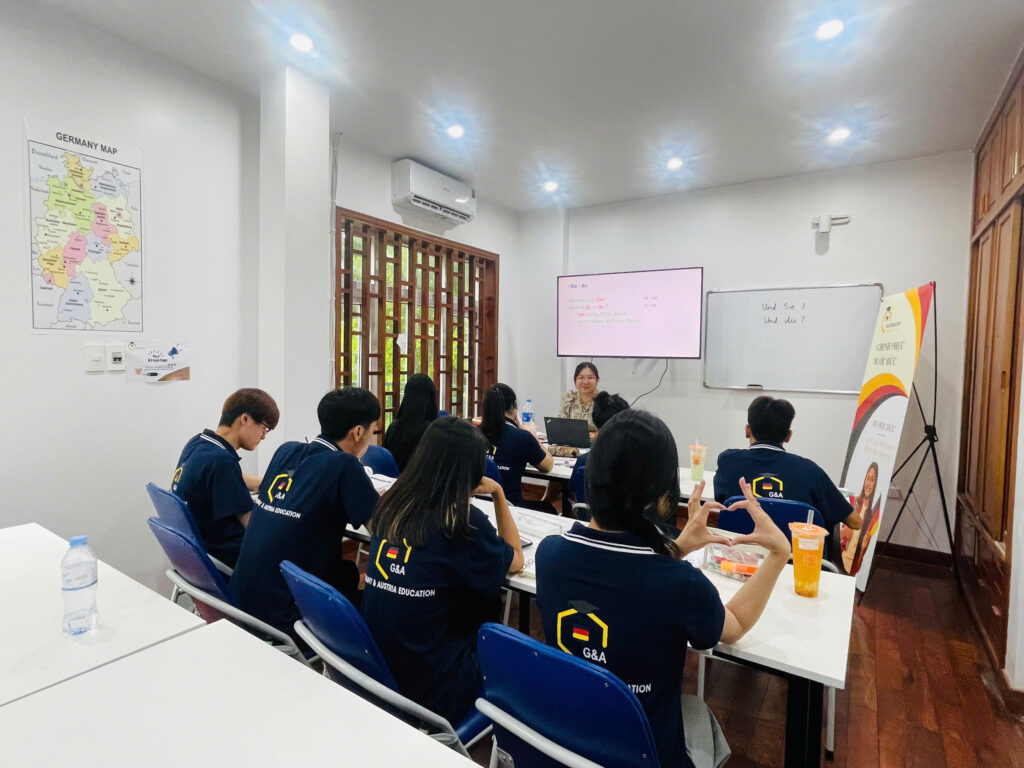
Finding Accommodation in Germany as a Student: WGs, Halls of Residence and 6 Scams to Avoid
Types of accommodation in Germany, where to search, scam warnings, the Kaution deposit under §551 BGB and 6 tr
Read more